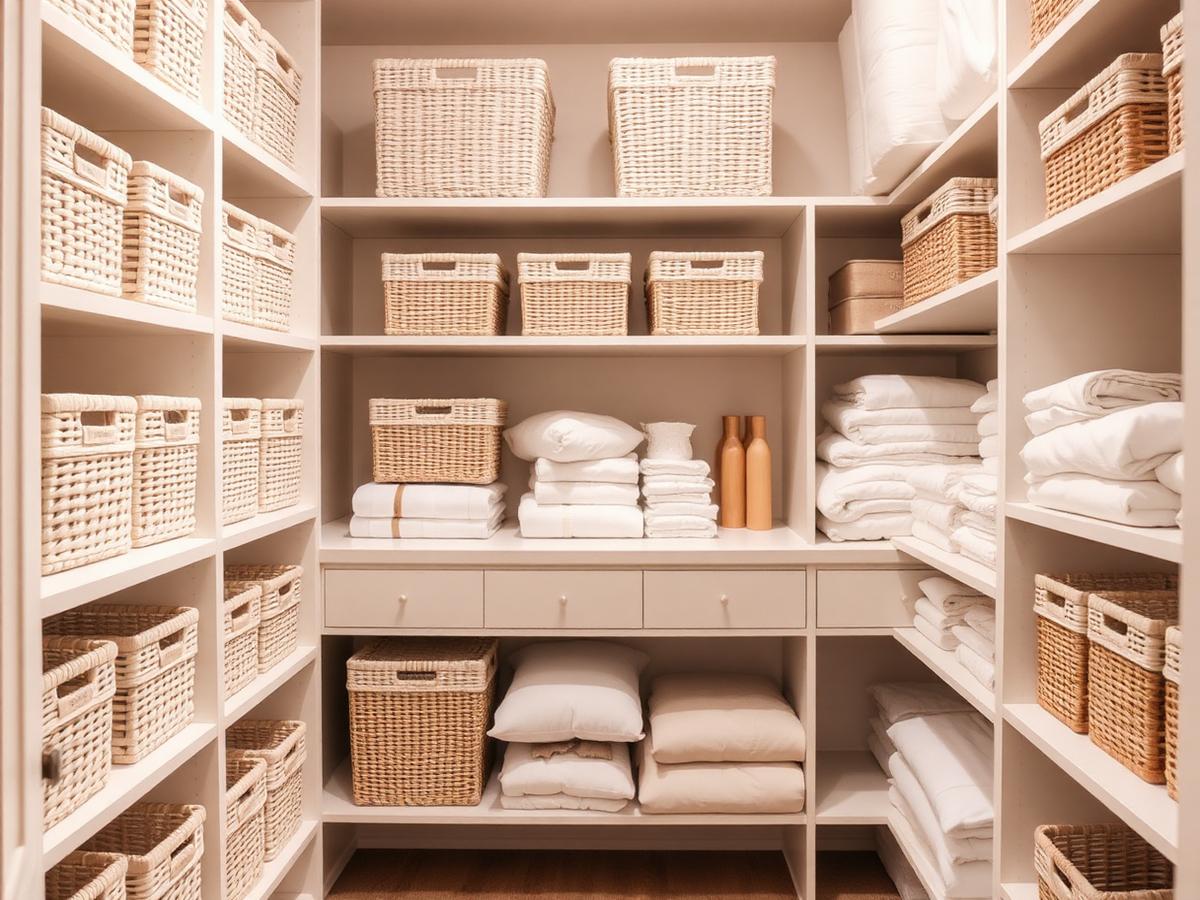
Closet: Before & After
Matching baskets, one shelf per category, and a donate bin on the floor at all times.
- 2 hours
- Closets
- $$
Organization
Organizing isn't about perfect bins — it's about designing your home so putting things away is the easiest option. Start with one zone, keep it beautiful, and let the habit build itself.
Zones
Matching baskets, one shelf per category, and a donate bin on the floor at all times.
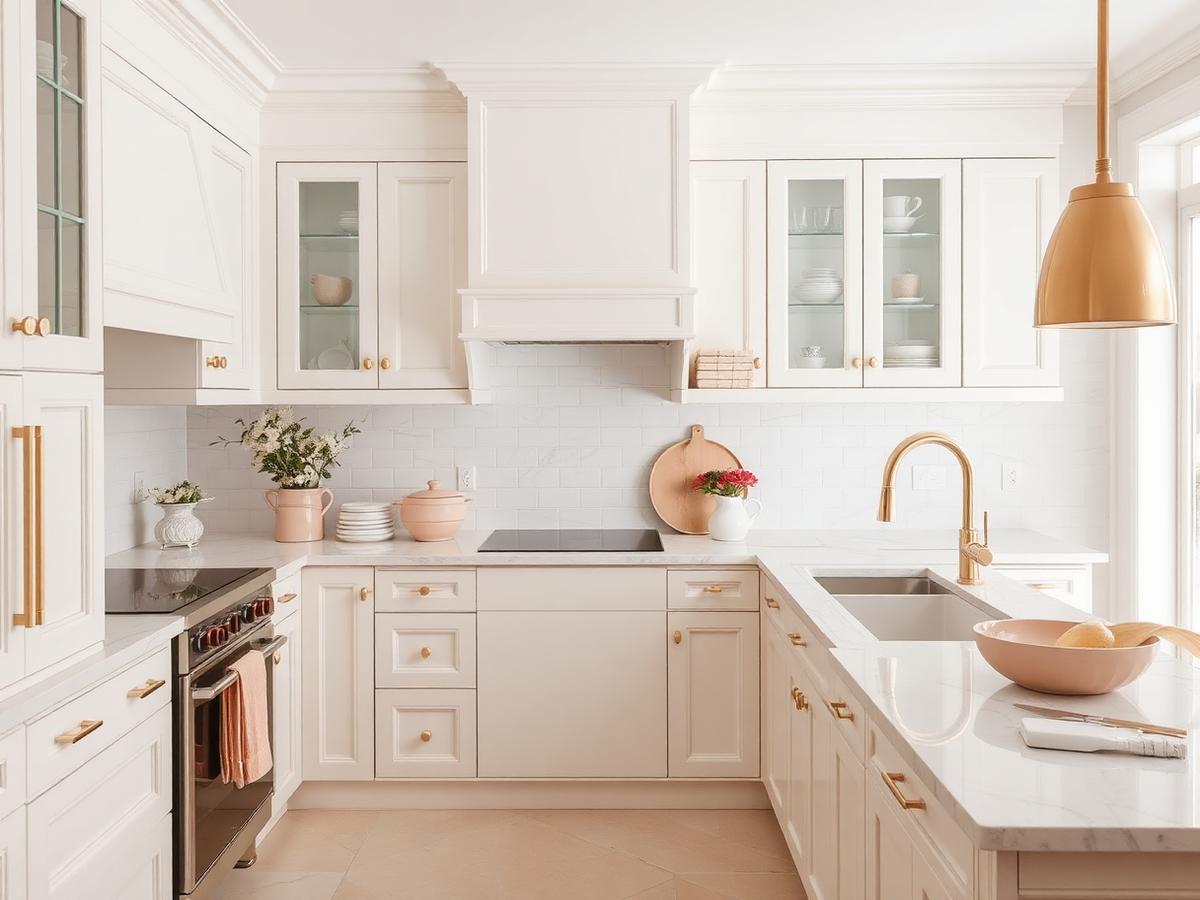
Daily items at arm's reach, backstock up high, and only three things left on the counter.
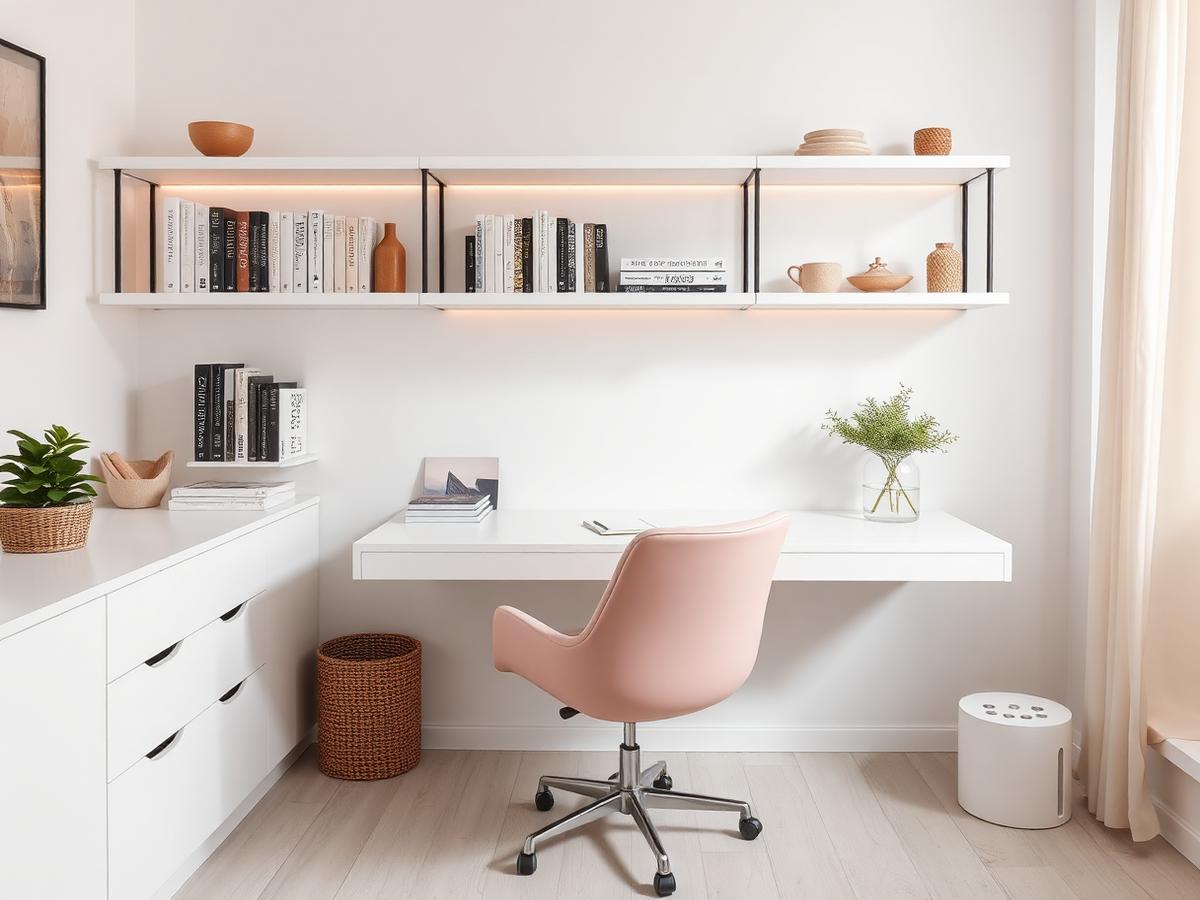
One inbox tray, one file box, and a ten-minute Friday sort keeps the pile from returning.
Do it together
One focused task a day — under an hour each. By Sunday your home feels lighter.
Day 1
Clear every flat surface — counters, tables, nightstands.
Day 2
One drawer, one shelf, one cabinet. Group like with like.
Day 3
Pull the pieces you haven't worn in a year into a donate bag.
Day 4
Sort into Act, File, Shred. Scan anything worth keeping.
Day 5
Toss expired products; corral the rest in two baskets.
Day 6
Build a landing zone: hooks, tray, basket, mirror.
Day 7
Set a 15-minute nightly tidy and one weekly laundry day.
Closets
Six small moves, ten minutes, and your closet looks cared for again. Check them off as you go.
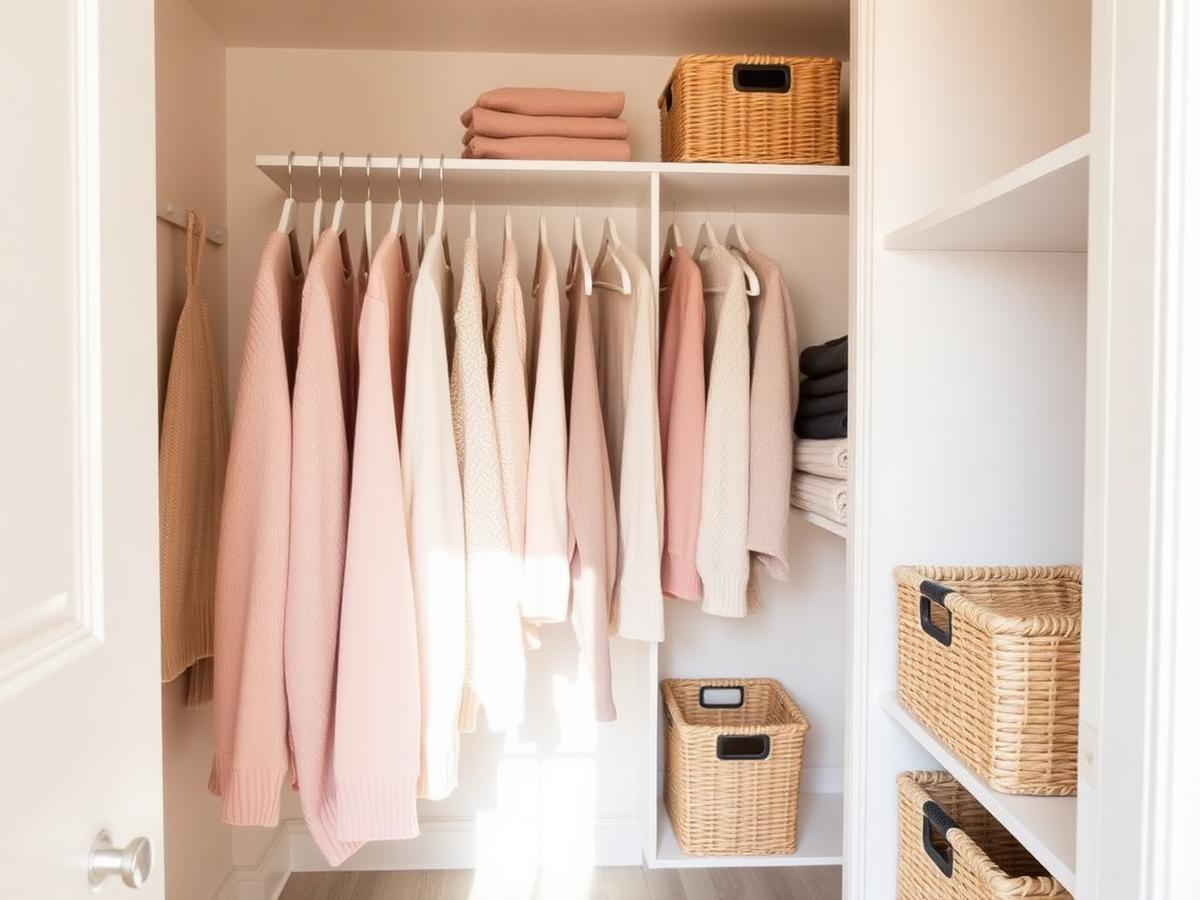
One rod, one shelf, one basket row. Matching hangers and a single donate bin keep the whole thing calm.
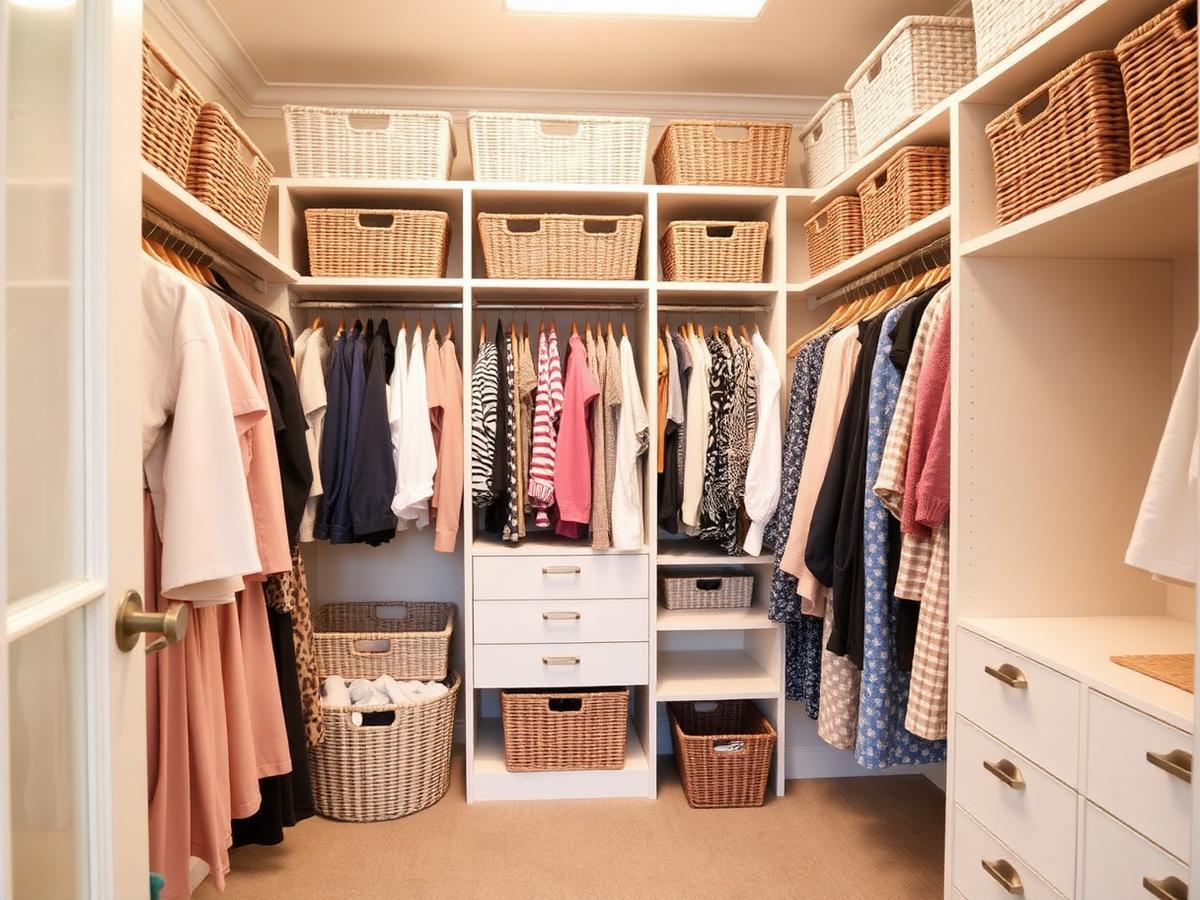
Give every person a labeled zone — a rod section, a basket, and a shelf — so nobody has to search.
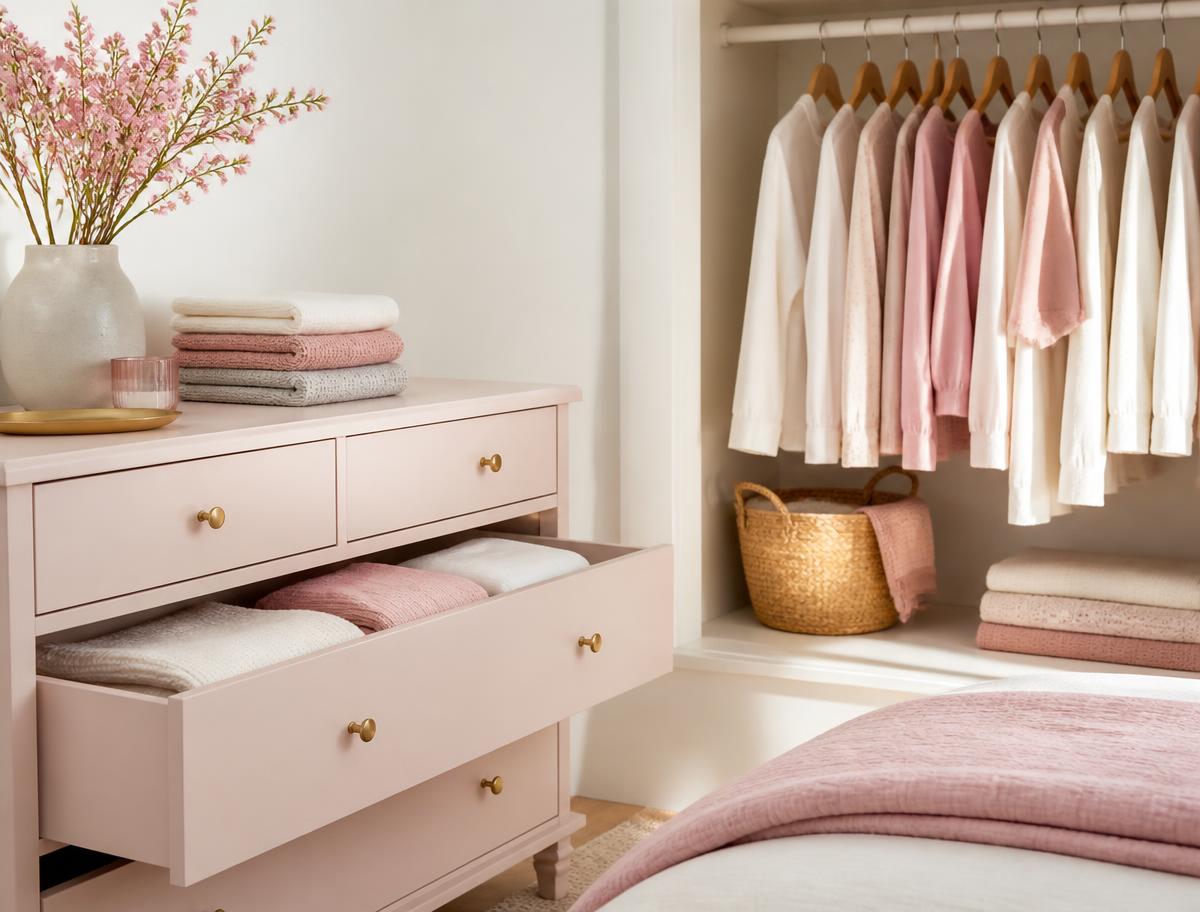
Drawer dividers, folded-file stacking, and off-season pieces moved out of prime real estate.
Two pages: the 10-minute reset, the four keep-or-donate questions, a closet zone plan, a donate log, and a four-week habit tracker.
Included in the JQ Home Organization Workbook Series
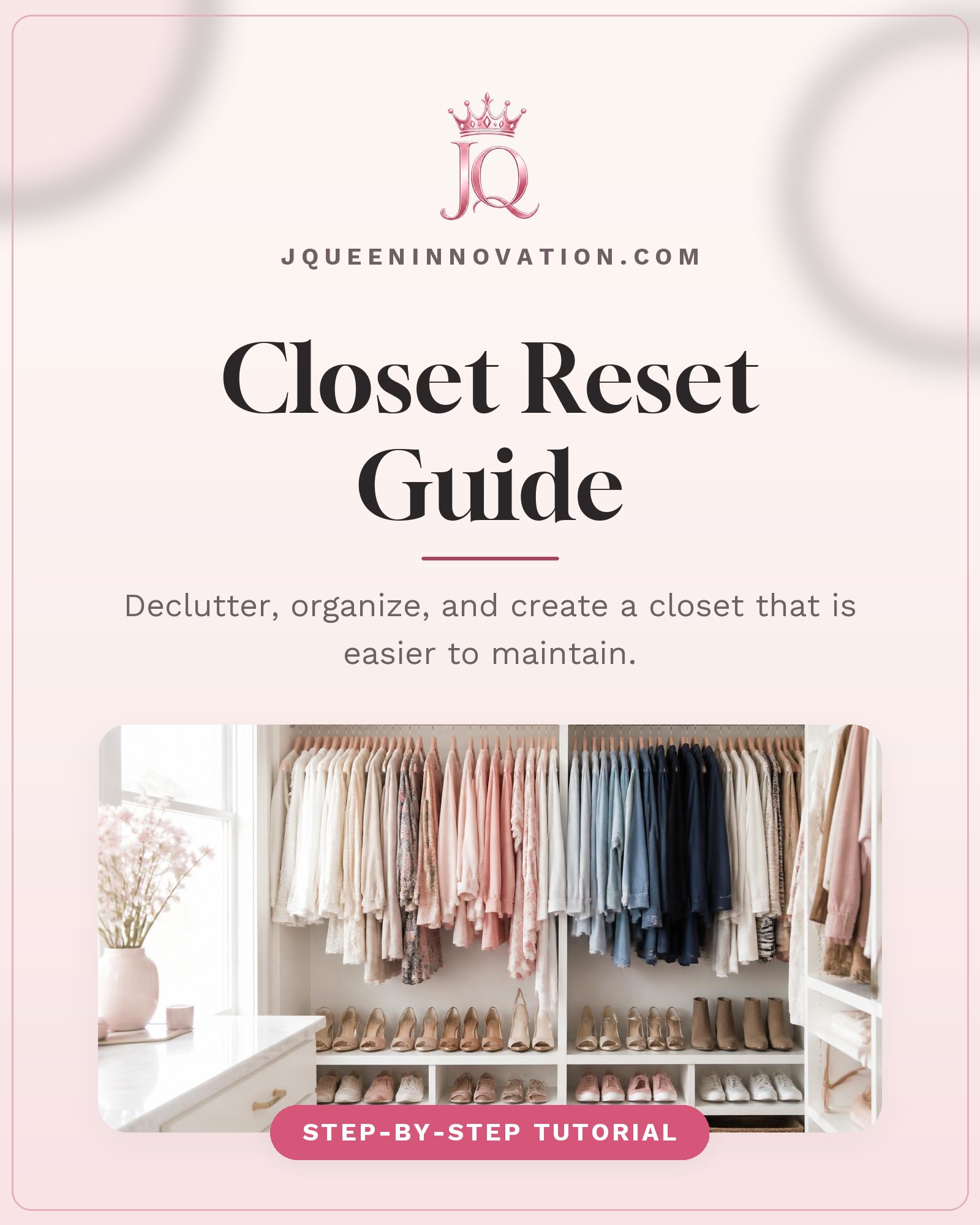
JQ Home Organization Workbook Series · Edition 01
Reset your closet so getting dressed feels simple again.
Paperwork
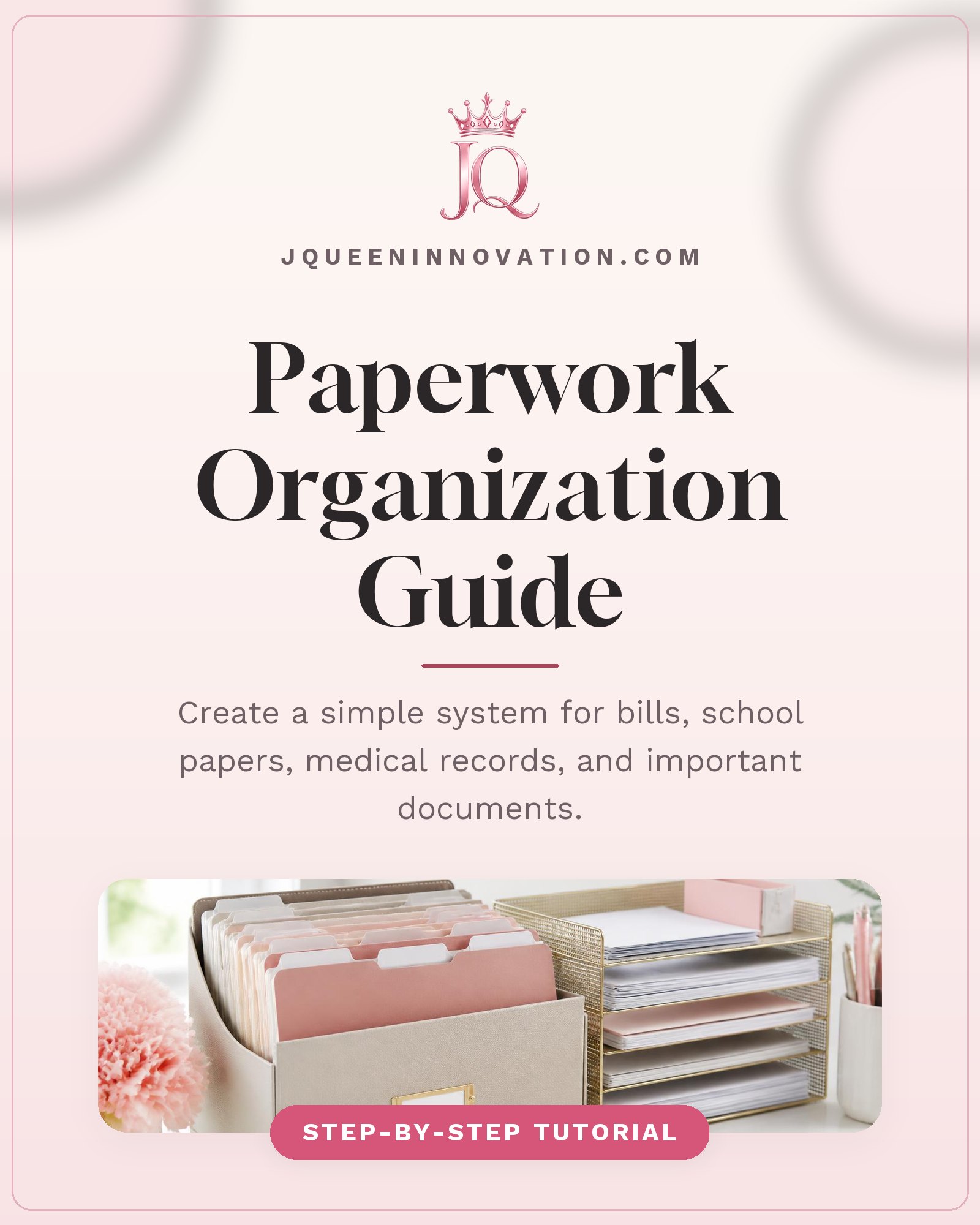
Paper only becomes clutter when it has nowhere to go. Give every document a clear place and bills, school papers, medical information, lease records, and household files become something you can find in seconds instead of something you dread.
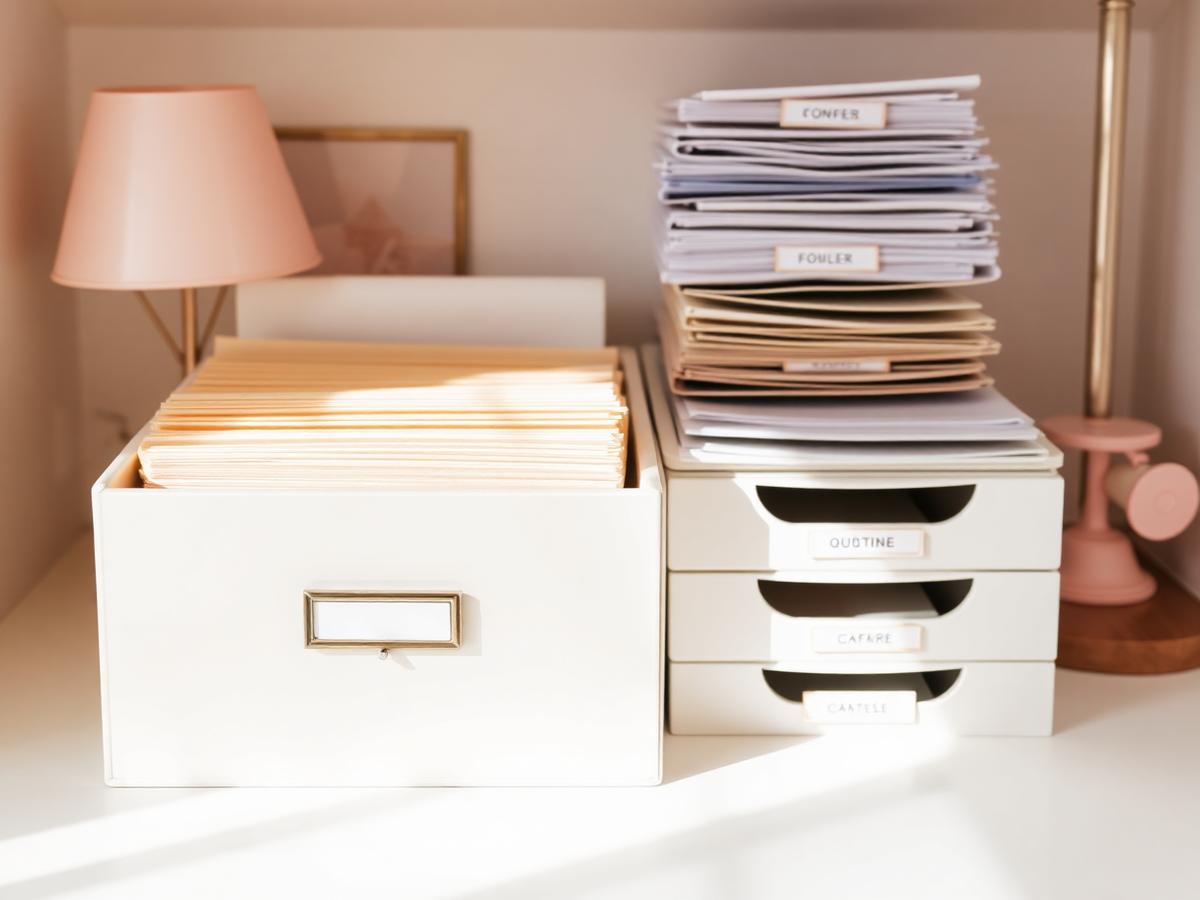
Gather paperwork from every room.
Sort it into Action, File, Shred, and Recycle.
Complete urgent paperwork first.
File long-term documents by category.
Shred documents containing private information.
Schedule one weekly paperwork review.
Statements, utilities, and receipts you may need for the next twelve months.
Visit summaries, immunizations, prescriptions, and insurance explanations.
Report cards, permission slips, IEP paperwork, and activity schedules.
Lease or mortgage, inspections, repairs, warranties, and HOA notices.
Returns, W-2s, 1099s, donation receipts, and investment statements.
Birth certificates, passports, Social Security cards, and licenses.
Four trays or hanging folders, stacked by the spot where mail lands. Every piece of paper goes into one of them the moment it enters your home.
Anything with a deadline this week — forms, bills, replies.
Sent, submitted, or pending. Check it every Friday.
Long-term records headed for a labeled category folder.
Anything with account numbers, signatures, or medical details.
Sorting steps, the six-folder categories, the four-tray review, retention timelines, and a four-week habit tracker.
Included in the JQ Home Organization Workbook Series
JQ Home Organization Workbook Series · Edition 02
Build one simple home for every paper that arrives.
Family Command Center
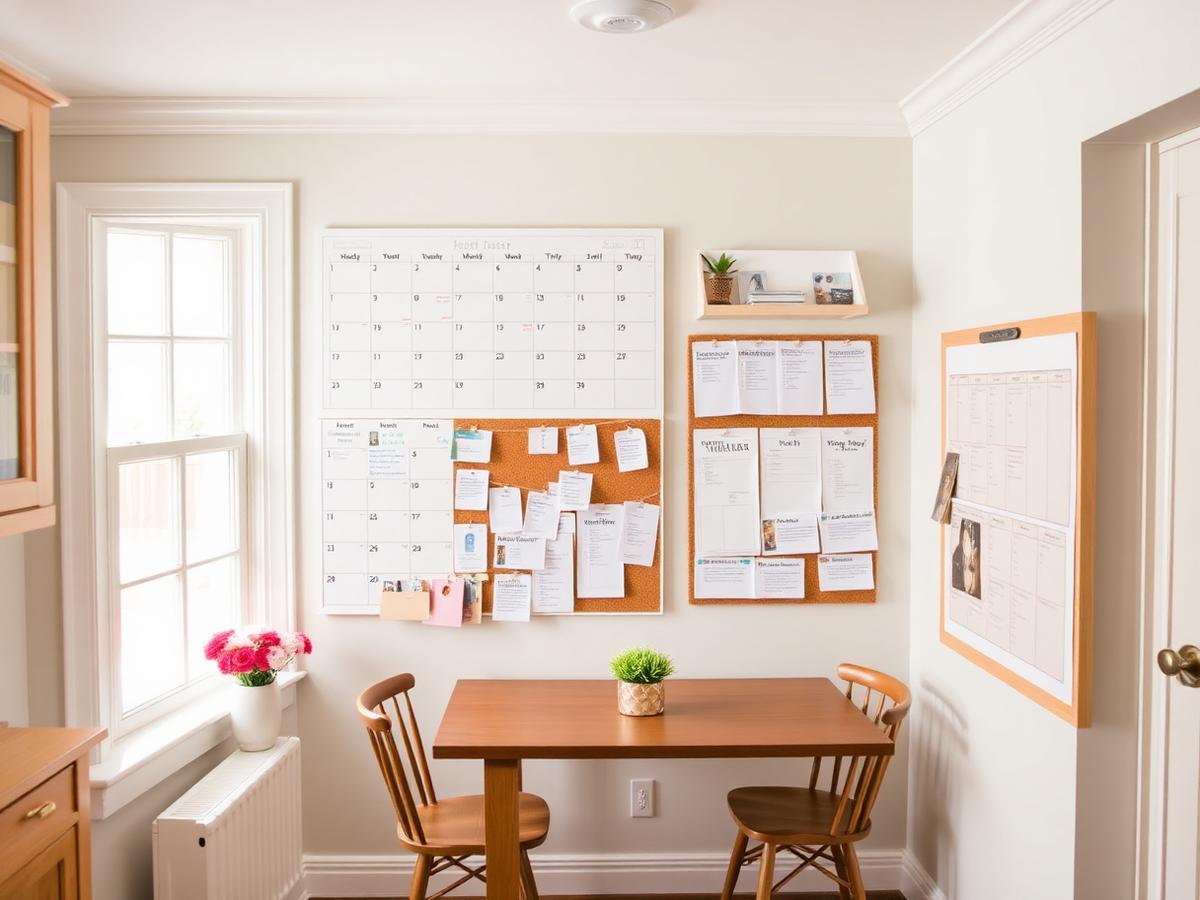
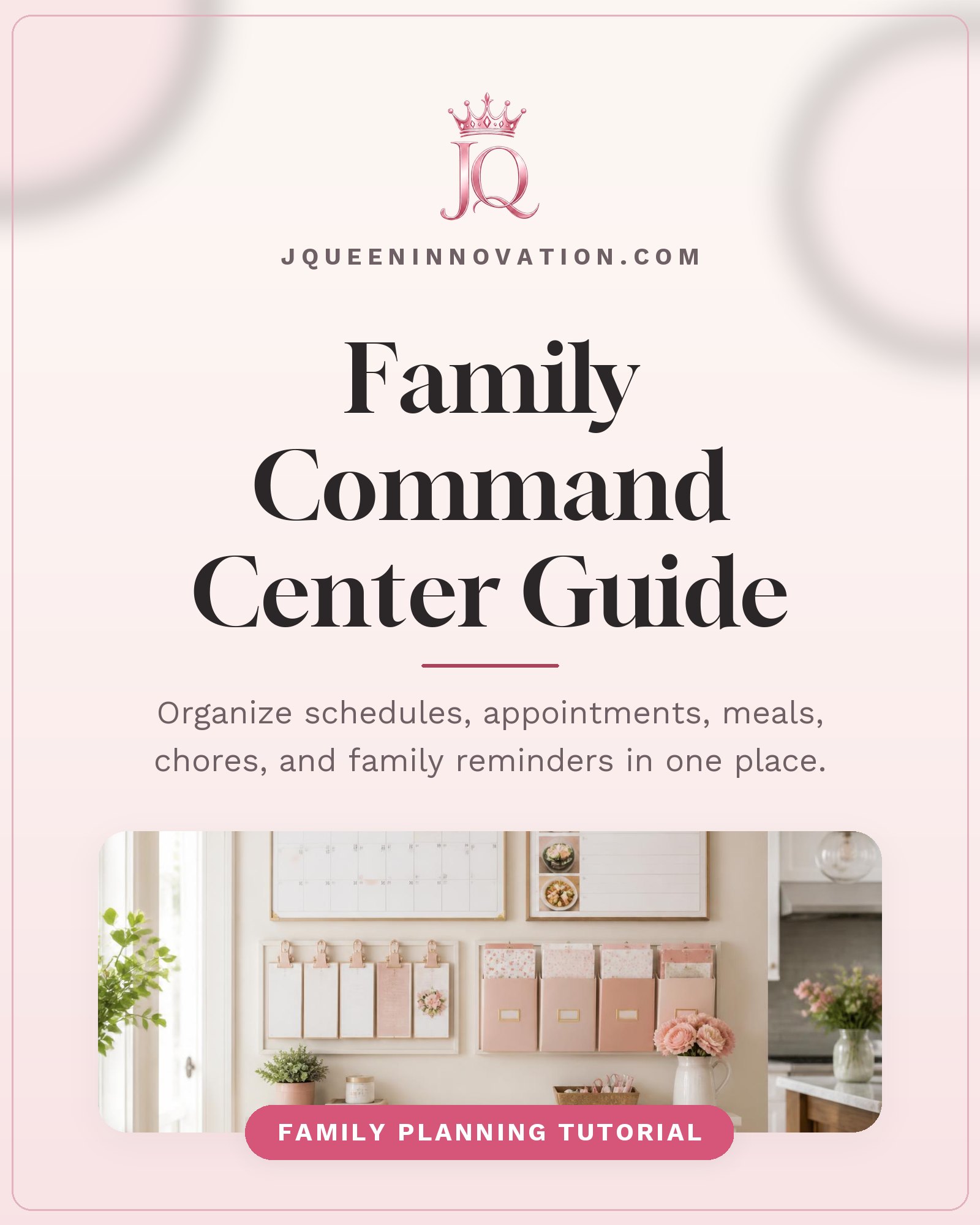
A command center is one small wall that answers every question before it gets asked. Appointments, school activities, meals, chores, reminders, and the paperwork that needs a signature all live in one place — so everyone in the house can see what's happening without asking you.
Choose a central location.
Add a large family calendar.
Create folders for each family member.
Add a meal-planning board.
Create an inbox for paperwork.
Review the command center every Sunday.
One shared month view so no appointment lives only in someone's head.
Seven dinners posted where everyone can read them — plus the grocery list.
Small, named, repeatable jobs with a box to check when they're finished.
A folder per child for forms going out and keepsakes coming in.
Doctor, dentist, therapy, and follow-ups with the phone number attached.
Permission slips, birthdays, renewals, and anything due this week.
Monday
Tuesday
Wednesday
Thursday
Friday
Saturday
Sunday
Categories to track: school, work, medical appointments, family activities, meal planning, and household tasks.
Assign tasks, appointments, activities, and reminders to each person. Add your own below.
Build steps, the weekly schedule grid, chore assignments, priorities, and a four-week habit tracker.
Included in the JQ Home Organization Workbook Series
JQ Home Organization Workbook Series · Edition 03
Set up one spot where the whole household stays in sync.
Bathroom
Bathrooms are the smallest rooms doing the most work. When products are grouped, backups are stored out of the way, and the counter holds only what you use every day, your morning and nighttime routines get faster and the clutter stops rebuilding itself.
Two stacking bins and a slim riser turn a dark cabinet into real shelving.
One lidded box, checked for expiration dates twice a year, stored up high.
A heat-safe caddy for tools, one bin for products, cords wrapped every time.
Daily routine in a tray on the counter, everything else in a drawer by type.
Rolled in a basket, folded in threes on the shelf, two sets per person max.
Toothbrushes, soap, deodorant — one small container at arm's reach.
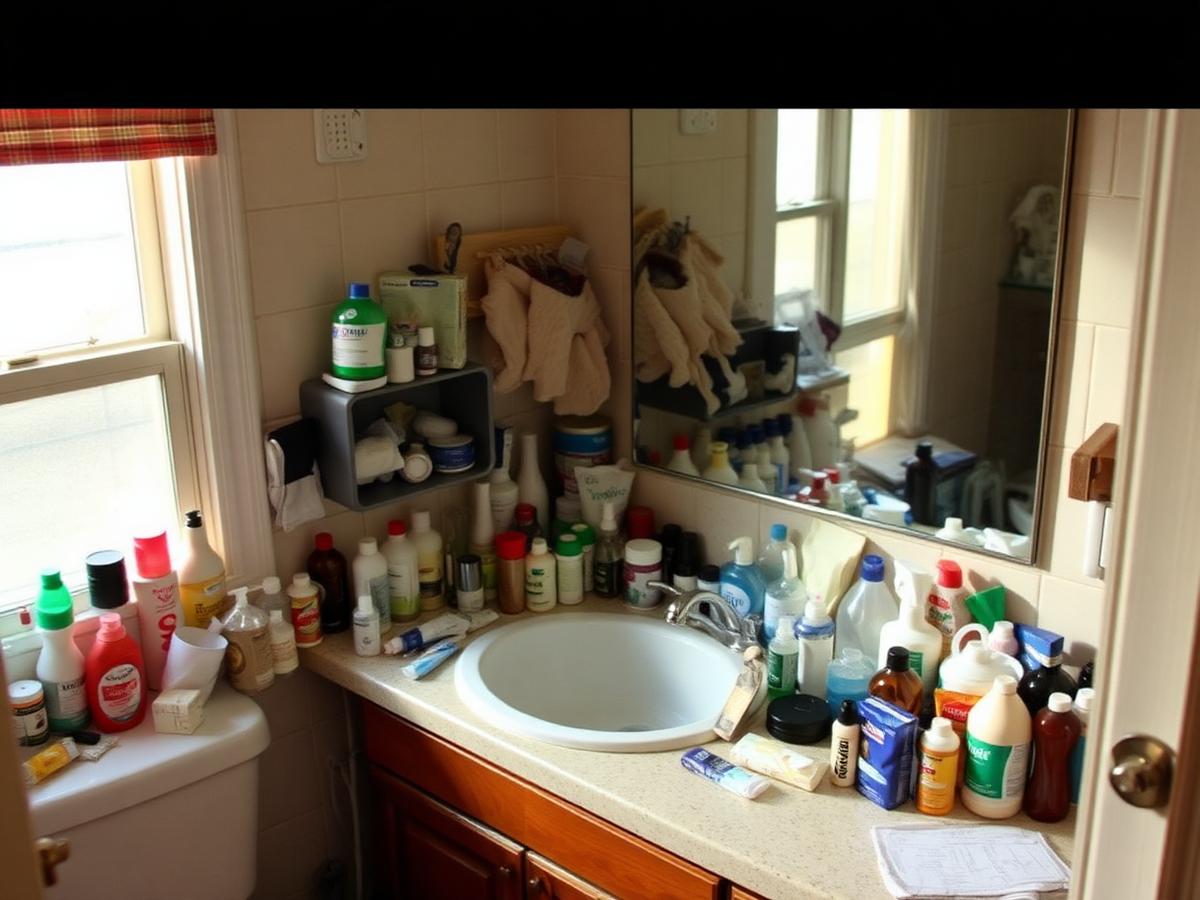
Every product visible, duplicates everywhere, and no clear surface to get ready on.
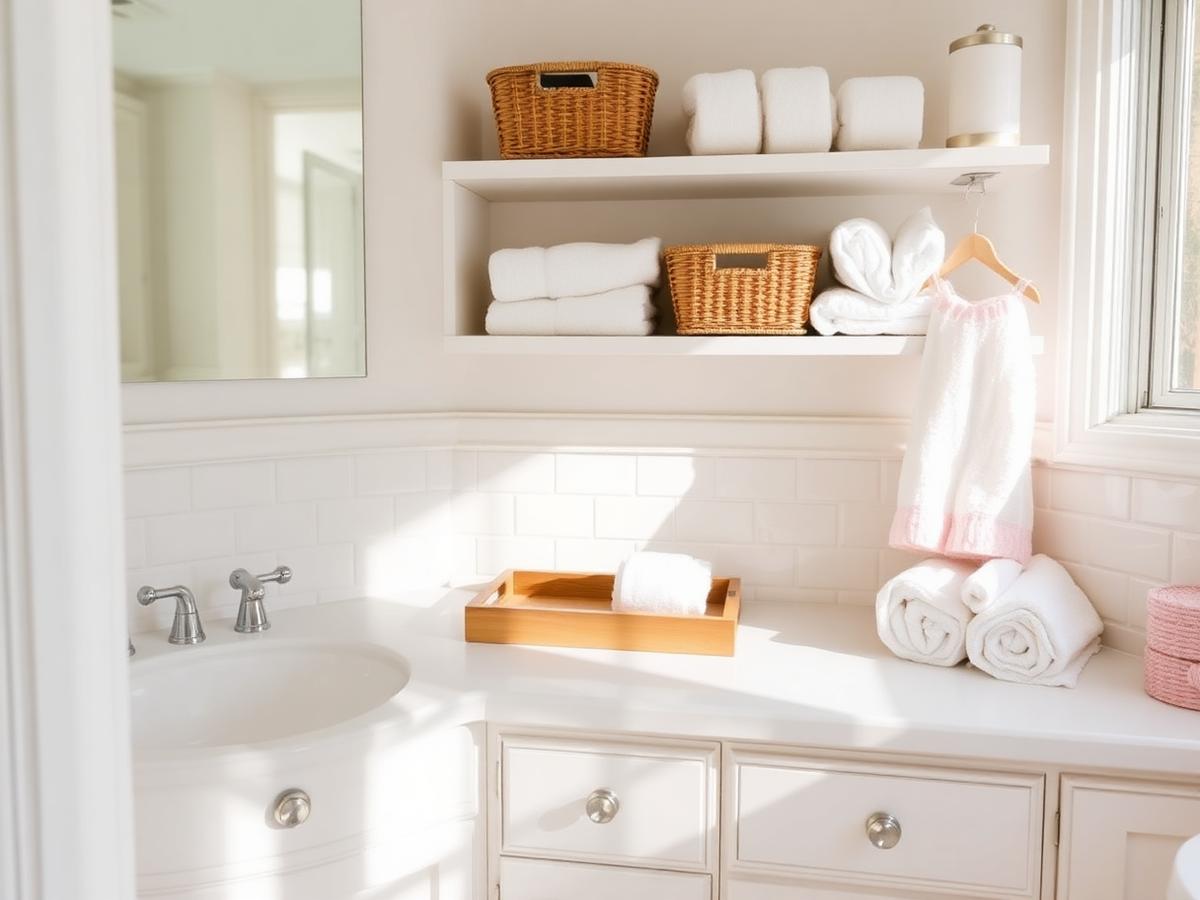
One tray of daily essentials, baskets on the shelf, backups behind cabinet doors.
Remove expired products.
Combine duplicate products.
Separate daily-use items from backup supplies.
Store products by category.
Add labels to bins and drawers.
Keep countertops limited to essential items.
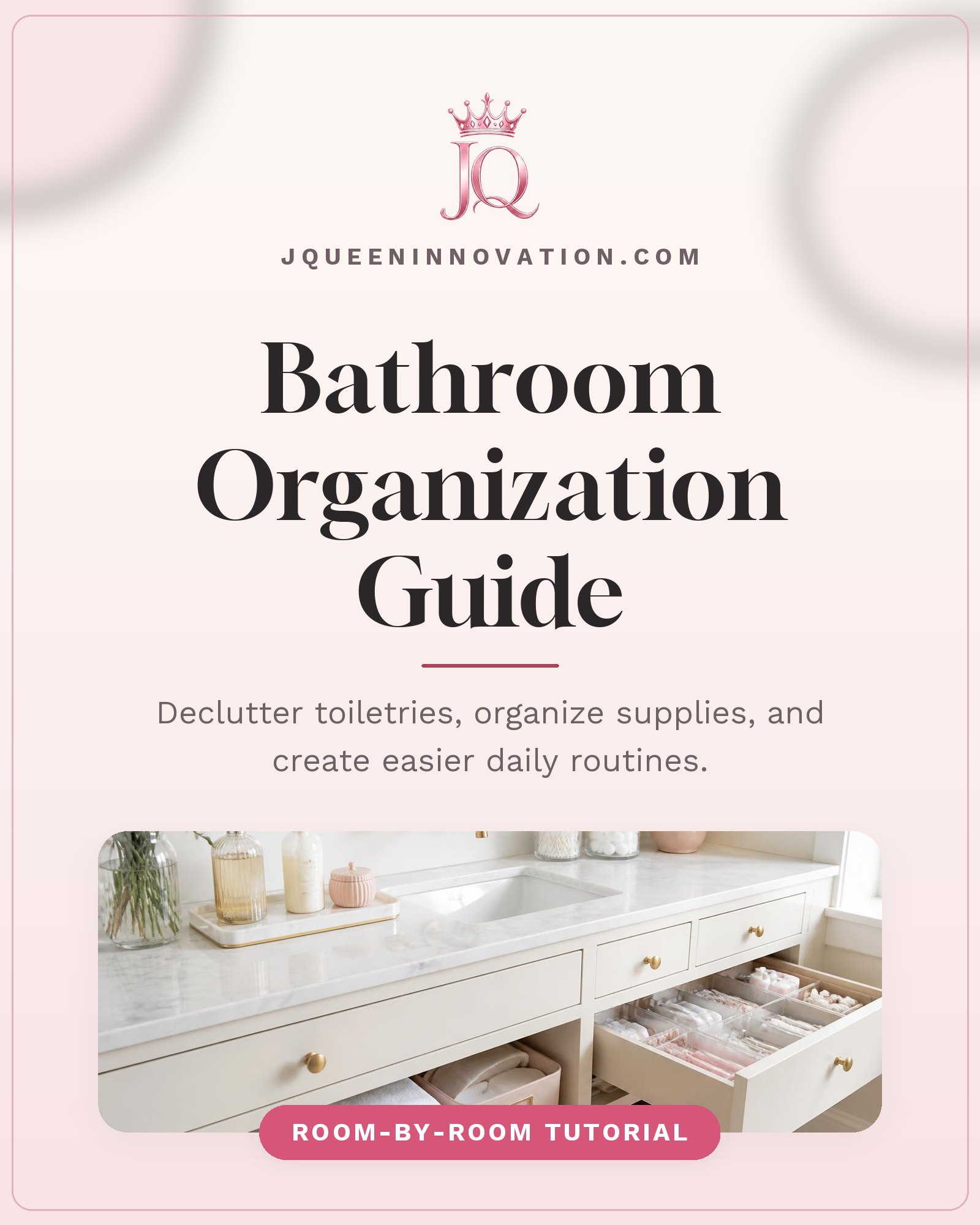
Daily and weekly resets, the decluttering process, a storage plan by category, and a four-week habit tracker.
Included in the JQ Home Organization Workbook Series
JQ Home Organization Workbook Series · Edition 04
Make a small bathroom feel calm and easy to use daily.
Cleaning Routines
Nobody keeps up with cleaning the whole house in one heroic day. Small routines repeated on a rhythm are easier to maintain, take less energy, and keep your home in a state you never have to recover from.
15:00
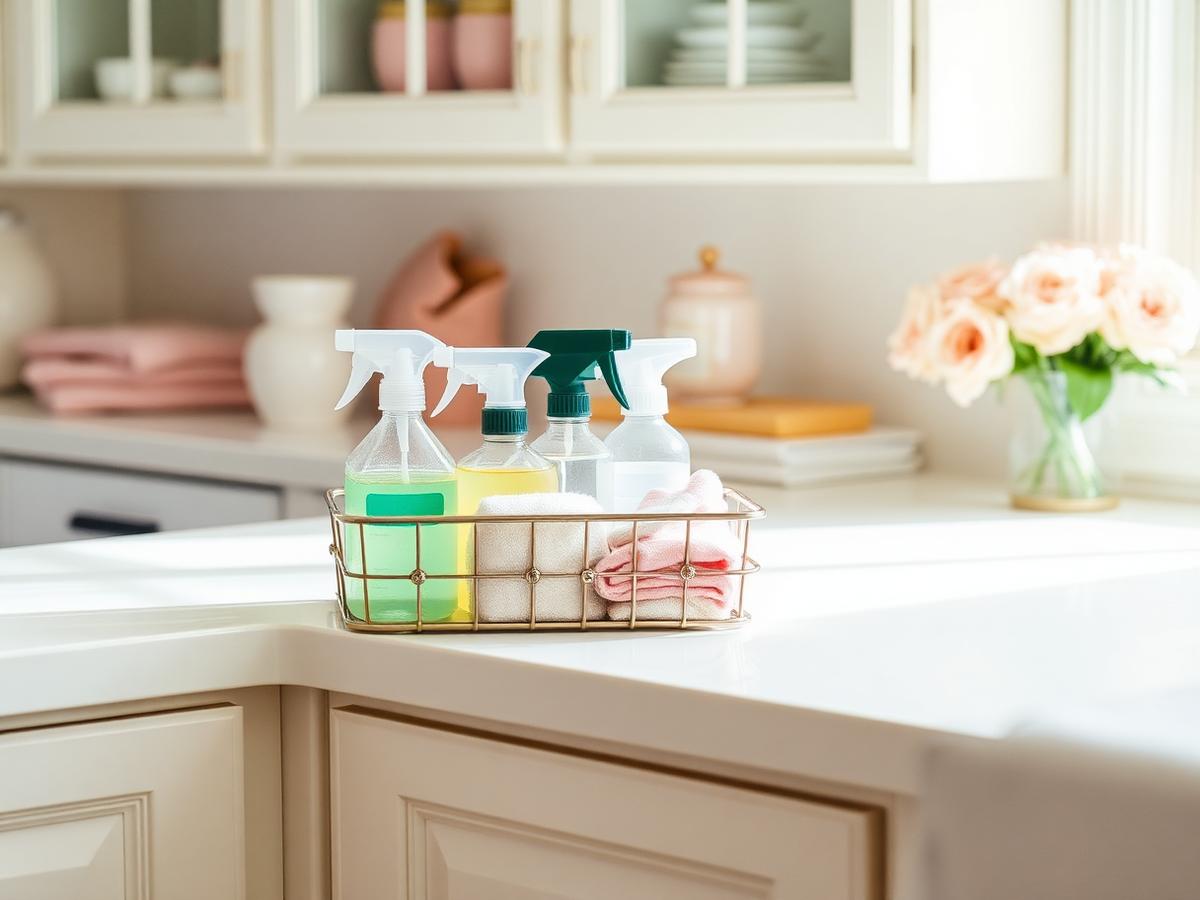
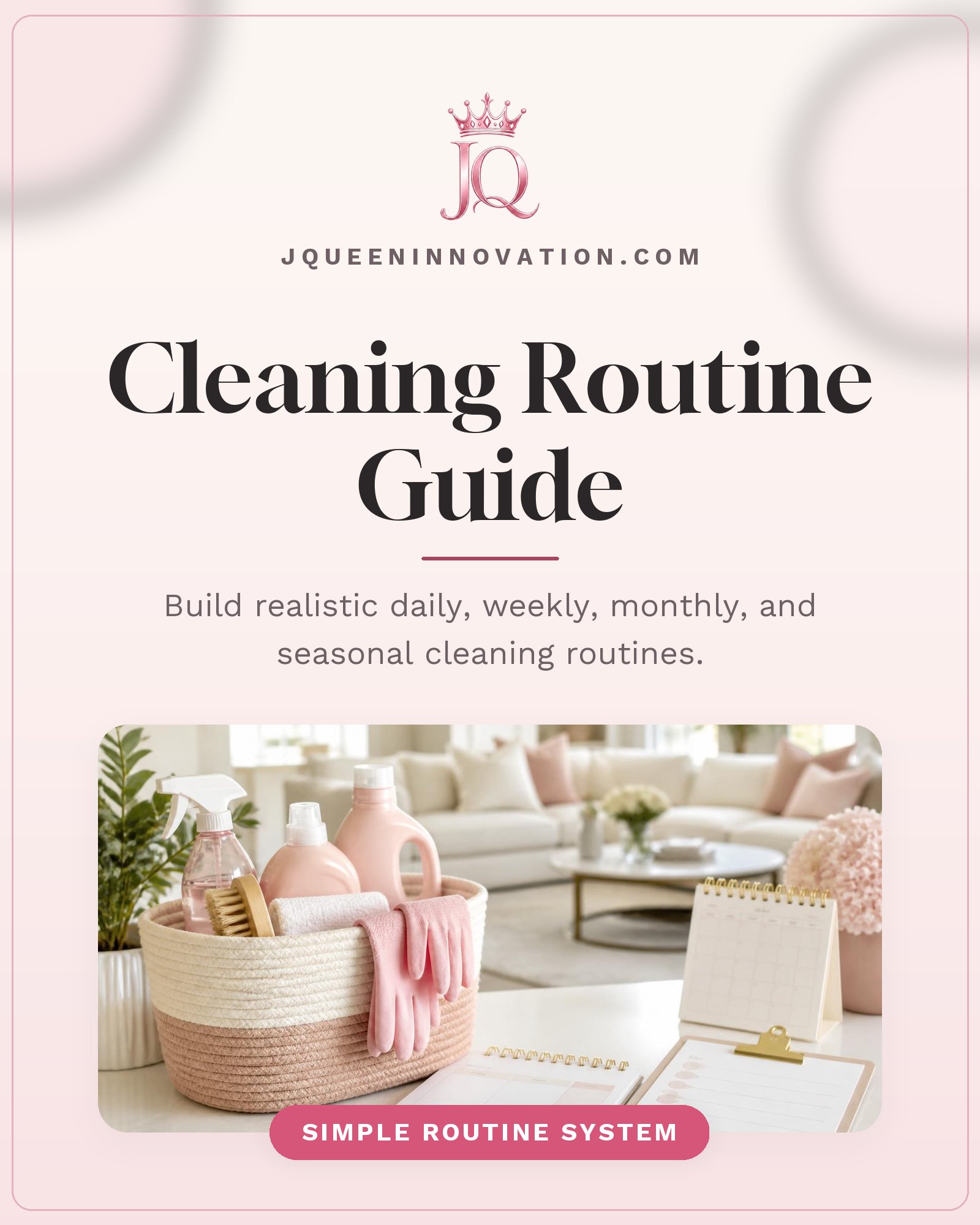
Daily, weekly, monthly, and seasonal lists plus the 15-minute reset steps and a four-week habit tracker.
Included in the JQ Home Organization Workbook Series
JQ Home Organization Workbook Series · Edition 05
Follow a realistic cleaning rhythm that fits your week.
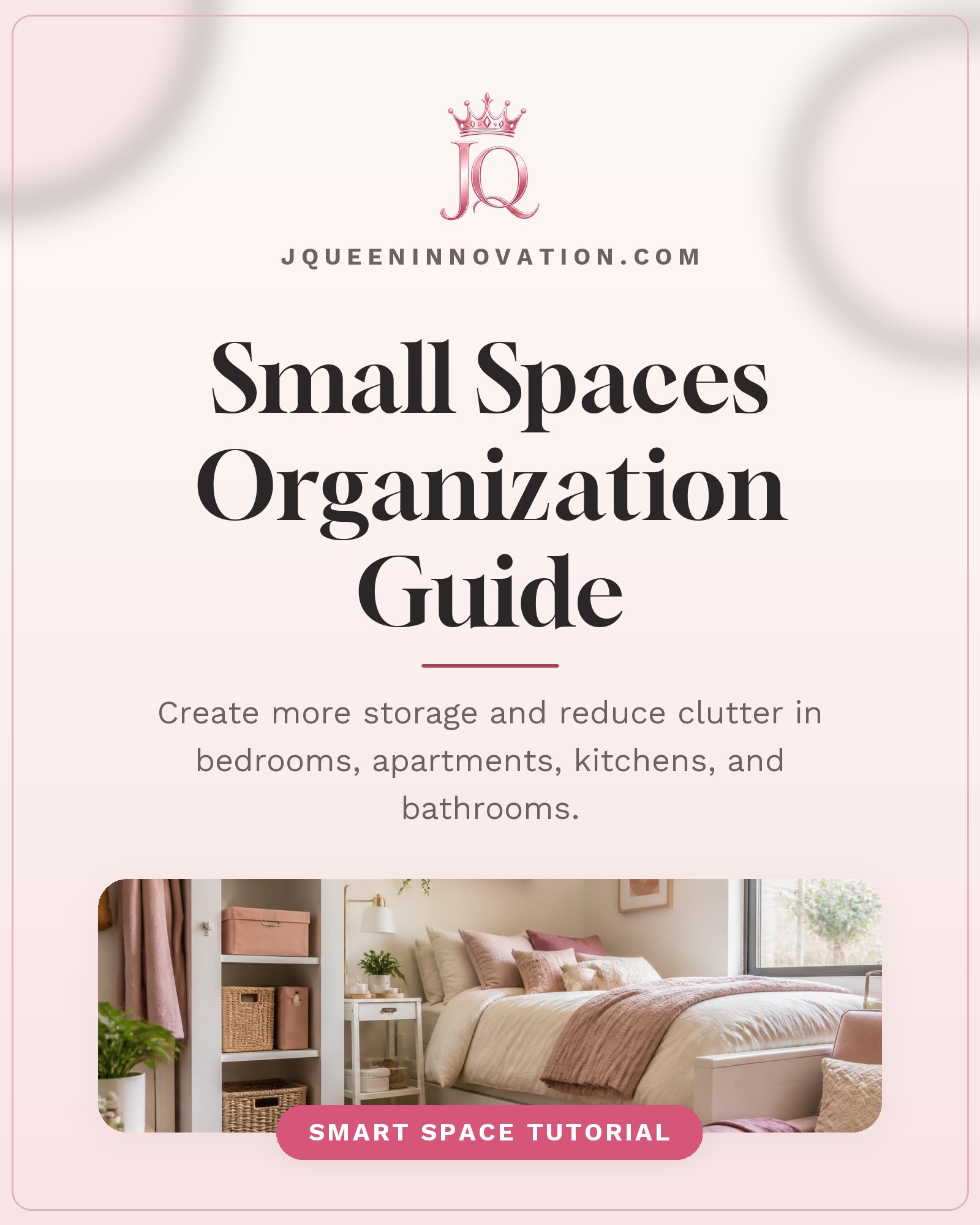
Small Spaces
A small home can feel genuinely spacious when every item has a purpose and storage uses the parts of the room you're currently ignoring — walls, the backs of doors, corners, and the hidden space under and inside furniture.
Shelving that climbs to the ceiling adds storage without taking a single step of floor.
Flat rolling boxes for linens, off-season clothing, and shoes you wear twice a year.
Pockets and hook racks on doors hold shoes, cleaning supplies, and pantry overflow.
Storage ottomans, lift-top tables, and beds with drawers do two jobs in one footprint.
Matching lidded baskets tuck clutter into plain sight without looking like clutter.
Wall rails, tiered risers, magnetic strips, and clear labeled containers up high.
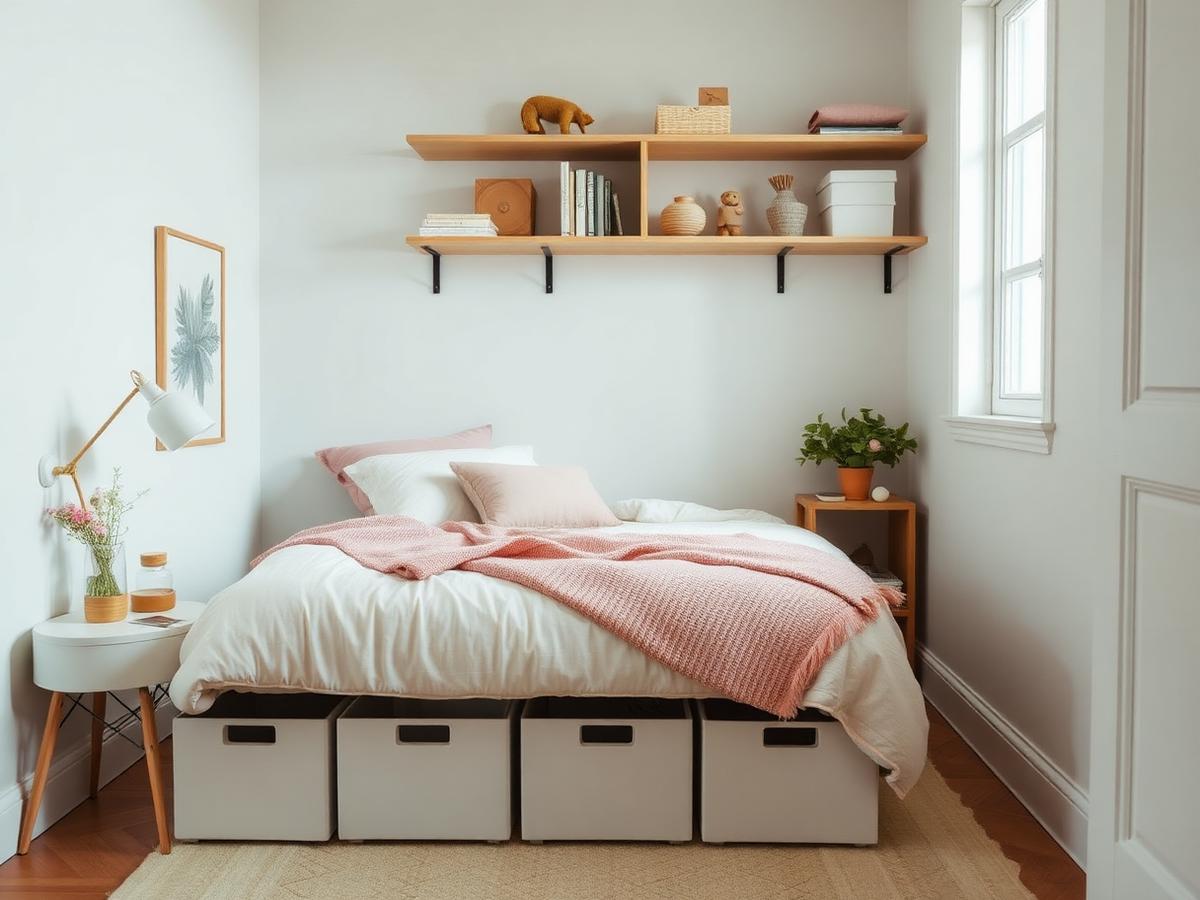
Bed risers with boxes underneath, shelves above the headboard, one nightstand that stores.
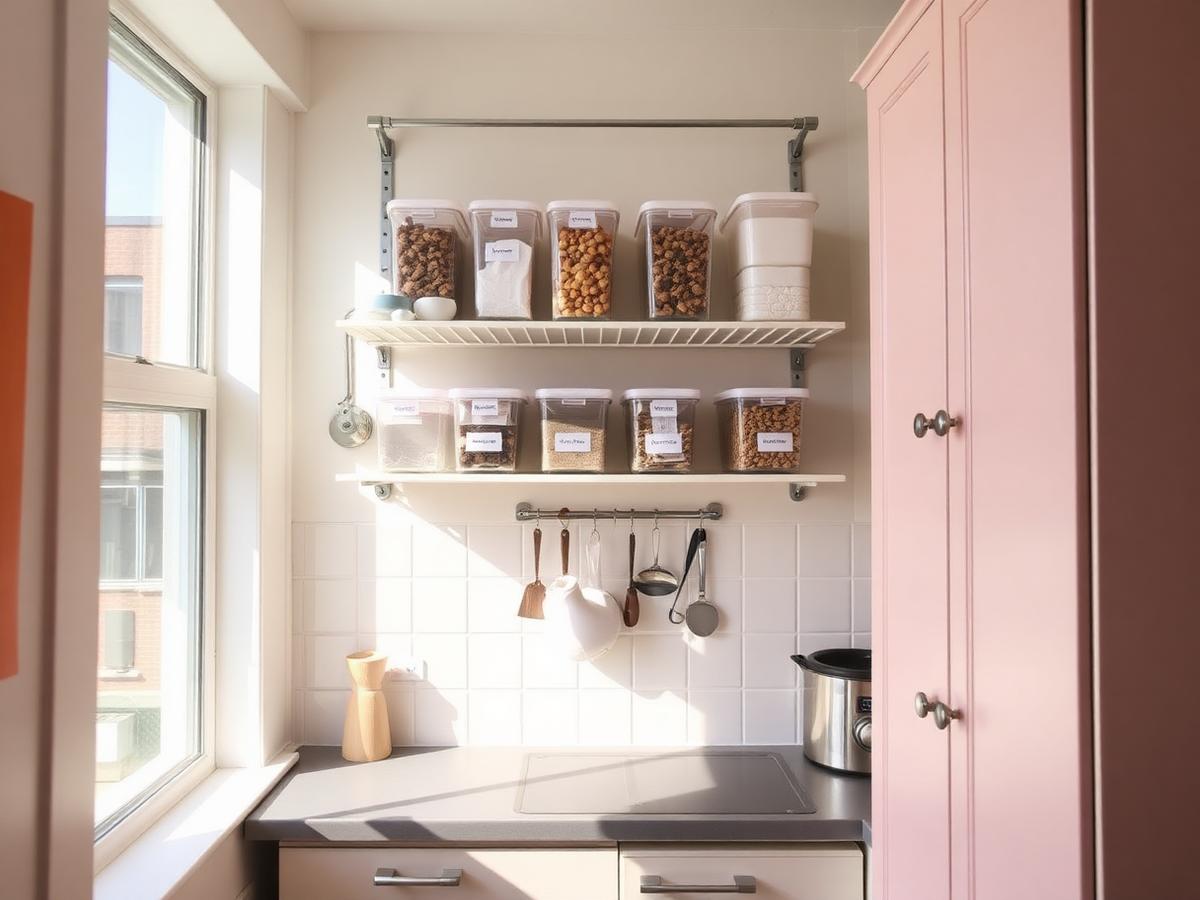
Rails for tools, clear canisters for staples, and backstock on the highest shelf.
A shelf above the door, a rolling cart in the gap, and one caddy per person.
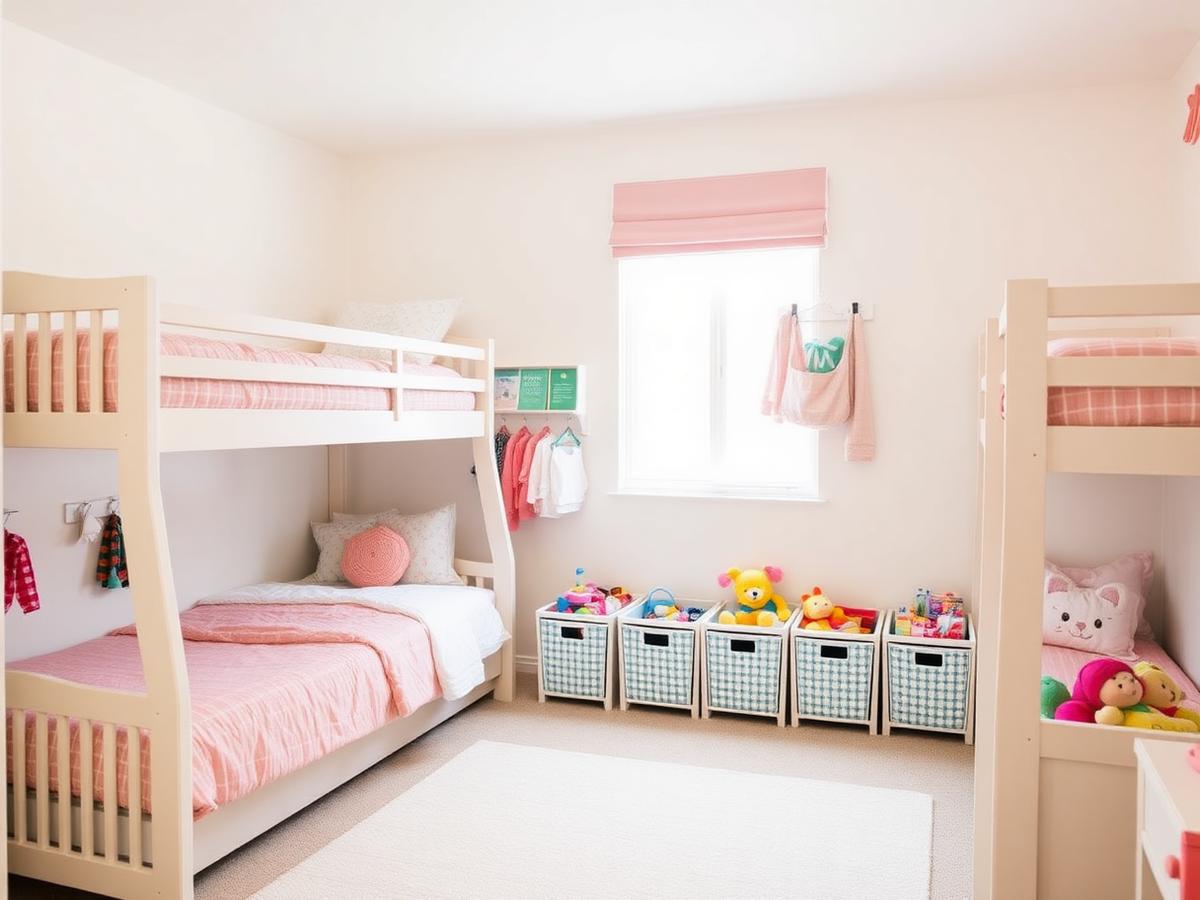
Bunk beds, labeled low bins kids can reach, and a hook per child at their height.
A wall-mounted desk, floating shelves, and one drawer that holds the whole system.
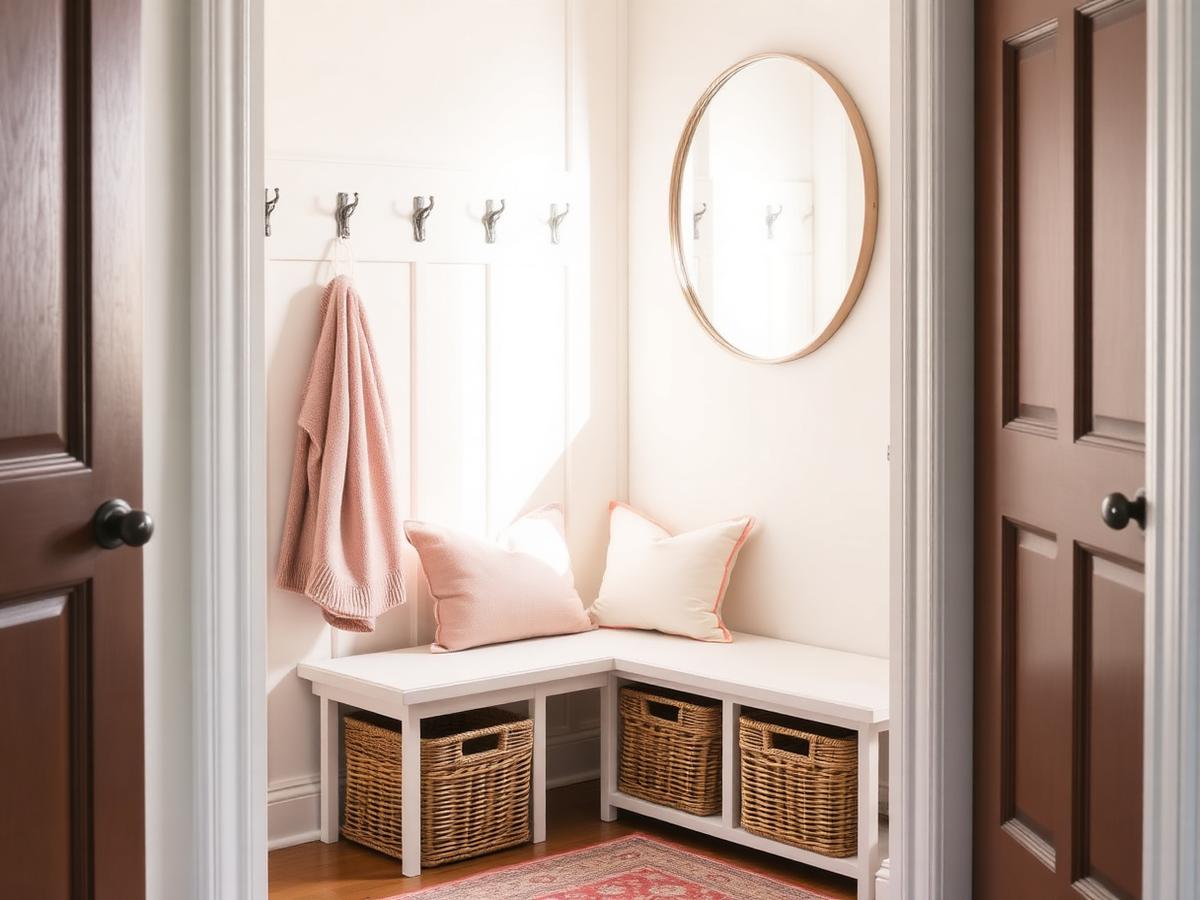
Hooks, a slim bench, baskets underneath, and a mirror to double the light.
Measure-before-you-buy fields, storage solutions, practical tips, mistakes to avoid, and a four-week habit tracker.
Included in the JQ Home Organization Workbook Series
JQ Home Organization Workbook Series · Edition 06
Help a small home hold more without feeling crowded.
The Weekly Edit
Join thousands of readers getting one styling idea, one storage fix, and one small upgrade every week.
No clutter — unsubscribe anytime.