All payments made in the preview are in test mode. Read more

Bedroom Organization Guide

Create a bedroom that feels calm, beautiful, and easy to maintain.

Your bedroom should be a place where you can relax—not another space that makes you feel overwhelmed.

The Bedroom Organization Guide from Jenny Queen Innovation gives you a simple, step-by-step system to clear clutter, organize your belongings, and create a classy, peaceful bedroom without spending a fortune or getting rid of everything you own.

You’ll learn how to organize your room with purpose, make better use of your available space, and create routines that help it stay clean long after the initial reset.

Inside the guide, you’ll discover:

  • A practical bedroom decluttering system
  • Simple closet and dresser organization methods
  • Classy, minimalist styling ideas
  • Small-space storage solutions
  • A manageable seven-day bedroom reset
  • Easy routines that prevent clutter from returning
  • A printable final checklist to keep you on track

This guide is ideal for anyone who feels stuck, overwhelmed, or unsure where to begin. You do not need a perfect home, expensive furniture, or professional organizing experience. You only need a starting point and a system you can realistically follow.

Clear the room. Calm the mind. Create a space that supports the life you are building.

Read the free tutorial steps

Printable PDF • Instant download after checkout. Go to the full checkout page.
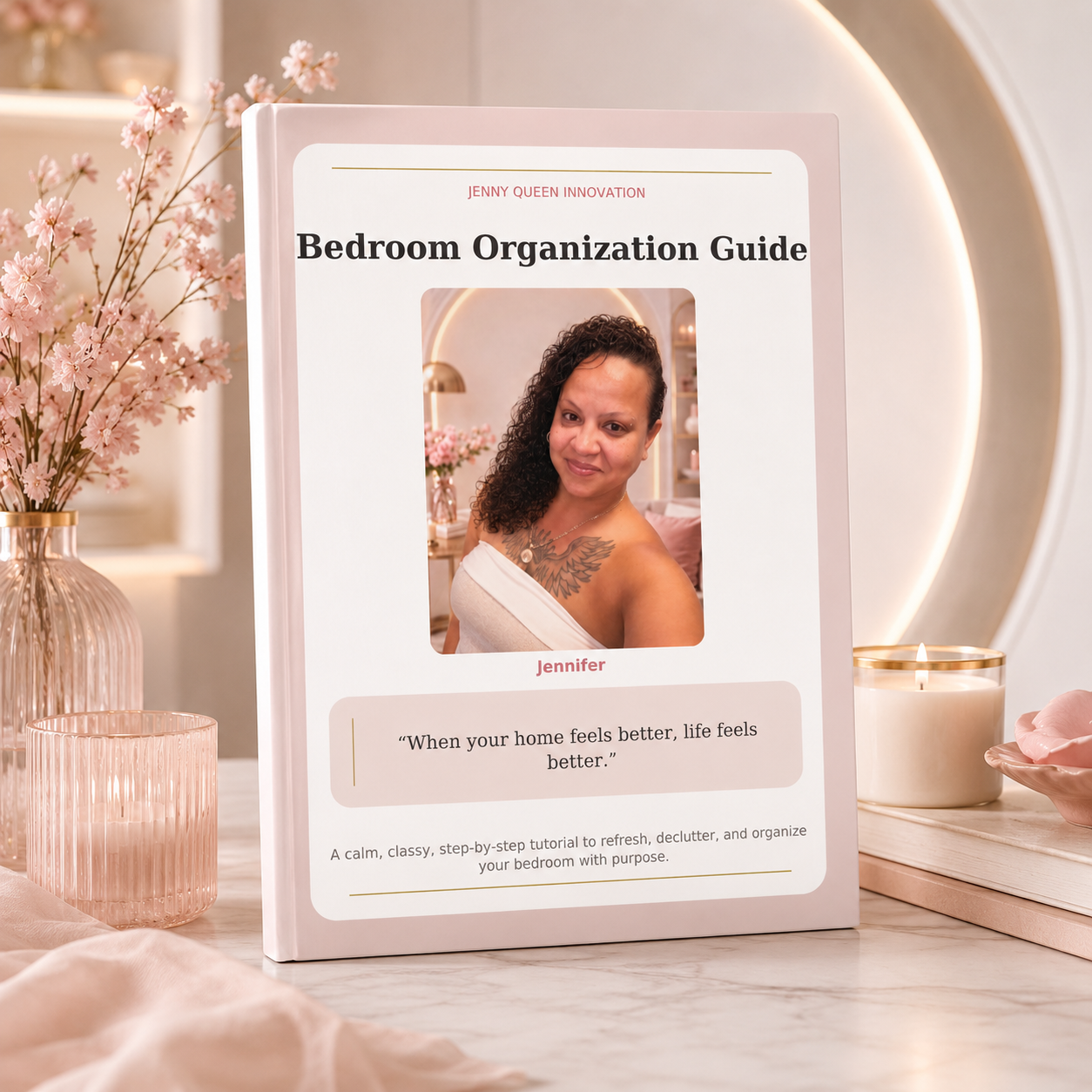
Printed Bedroom Organization Guide by Jenniffer displayed on a marble table with pink blossoms and a candle

“When your home feels better, life feels better.”

Jenniffer, Jenny Queen Home Innovations

Before you begin

Set yourself up for an easy win

A classy bedroom is not created by buying more. It is created by giving every useful item a purpose, a home, and enough breathing room.

Set aside time

Two focused hours for the first reset — or one section per day.

Gather supplies

Four boxes, a laundry basket, cleaning cloths, labels, measuring tape.

Choose your mood

Write three words for how the room should feel: calm, airy, warm.

Stay safe

Don't block vents, overload outlets, or build unstable stacks.

Keep here

Useful in the bedroom and used regularly.

Move elsewhere

Belongs in another room.

Donate or sell

Good condition, no longer needed.

Trash or recycle

Broken, expired, stained, unusable.

The tutorial

Seven steps, from vision to maintenance

Work them in order. Removing always comes before arranging.

  1. Step 1Imagine

    Define the room you want

    Decisions get easier when you know what the room is supposed to do and how you want it to feel.

    • Choose three feeling words — for example calm, polished, warm — and use them as your filter.
    • Name the room's jobs: sleep, dress, prepare, restore, store, reset.
    • Pick a restrained palette: one main neutral, one supporting tone, one accent. Repeat them.
  2. Step 2Empty

    Clear the visible clutter first

    Quick visual progress builds momentum. Work the surfaces before you open a single drawer.

    • Make the bed — it becomes your clean staging surface.
    • Collect all trash, then return dishes and food to the kitchen.
    • Gather laundry, then clear the floor of shoes, bags, cords, and boxes.
    • Empty every flat surface: nightstands, dresser, chair, windowsill.
    • Use the 20-second rule: use it, love it, belongs here? Unsure items go in one small 'decide later' box with a date.
  3. Step 3Clean

    Create a fresh, quiet canvas

    Cleaning after decluttering makes the room feel lighter and shows you what needs repair.

    • Dust top to bottom: fan blades, fixtures, vents, frames, headboard.
    • Wipe mirrors, windows, doors, handles, and baseboards.
    • Vacuum mattress seams; wash bedding, pillow covers, and washable curtains.
    • Vacuum or mop the floor — including under the bed.
    • Fix now: loose handles, dead bulbs, wobbly furniture. Schedule: paint, curtains, shelving.
  4. Step 4Zone

    Give every activity a zone

    A room stays organized when an item's location matches the moment you use it.

    • Sleep zone: bed, pillows, blanket, reading light, one current book.
    • Nightstand: limit the top to 3–5 visible objects; hide cords in the drawer.
    • Dressing zone: place the hamper where clothing naturally lands.
    • Getting ready: daily products in one tray, occasional items out of sight.
    • Drop zone: one hook, one tray, or one small chair — never a whole surface.
  5. Step 5Contain

    Organize clothing and personal items

    The goal is not to fit the most. It is to see, reach, and return what you own.

    • Empty the closet by category, then keep only what fits your current life.
    • Group like with like and arrange by color, light to dark.
    • Use matching slim hangers and leave a small gap between garments.
    • Dresser: one category per drawer — essentials up top, seasonal down low.
    • Buy organizers last. Measure closet width, under-bed height, and drawer depth first.
  6. Step 6Style

    Style with restraint and warmth

    Minimal does not have to mean empty. A few intentional details finish the room.

    • Use the 60-30-10 rule: main neutral, supporting tone, accent.
    • Nightstand formula: lamp + small tray + one meaningful item.
    • Bed formula: smooth foundation + two sleeping pillows + one or two decorative + one throw.
    • Walls: one larger statement piece reads calmer than many small ones.
    • Layer lighting: ambient, task, and a warm accent glow.
  7. Step 7Maintain

    Keep it organized with tiny resets

    The best system is one you can keep on an ordinary, imperfect day.

    • Five-minute nightly reset: laundry away, surfaces clear, shoes and bags home, tomorrow set out.
    • Weekly, 20 minutes: change bedding, dust, vacuum, empty trash, return strays.
    • Monthly, 30 minutes: edit one drawer, drop donations, refill essentials, rotate seasonal items.
    • Three boundaries: one in one out, no homeless items, let the container set the limit.

Pace yourself

Your 7-day bedroom reset

Use this plan when a full-day makeover feels overwhelming. Each day has one clear finish line.

Day 1

Vision + Trash

Choose three feeling words. Clear trash, dishes, and strays.

Day 2

Laundry + Floor

Sort laundry, clear the floor, return shoes and bags.

Day 3

Surfaces + Clean

Empty surfaces. Dust, wipe, vacuum, wash bedding.

Day 4

Closet

Edit by category, group like items, add breathing room.

Day 5

Dresser

One category per drawer. Divide accessories and skincare.

Day 6

Zones + Styling

Build sleep, dressing, prep, and drop zones. Style lightly.

Day 7

Final Reset

Drop donations, label storage, hide cords, start the nightly reset.

Finish strong

Final bedroom checklist

Decluttered

  • Trash and dishes removed
  • Laundry sorted
  • Floor clear
  • Donation bag ready

Organized

  • Closet grouped by category
  • Drawers assigned
  • Daily items easy to reach
  • Every item has a home

Cleaned

  • Bedding washed
  • Surfaces dusted
  • Mirrors wiped
  • Floor vacuumed or mopped

Styled

  • Palette feels consistent
  • Nightstand has 3–5 items
  • Dresser mostly clear
  • Lighting feels soft

Want the printable version?

The full illustrated guide includes the palette pages, zone tables, and a printable 7-day plan. One payment of $9.99 — download instantly after checkout.

Printable checklist pack

Six printable PDF checklists — $12.99

The printable versions of every organization system on this site. Twelve pages total: one checklist page per zone plus a four-week habit tracker for each. Locked until purchase, then downloadable instantly.

  • Quick Closet Reset — the 10-minute reset, keep-or-donate questions, zone plan and donate log
  • Paperwork System — sorting steps, six-folder categories, four-tray review and retention timelines
  • Family Command Center — build steps, weekly schedule grid, chore assignments and priorities
  • Bathroom Reset — daily and weekly resets plus a storage plan by category
  • Cleaning Routines — daily, weekly, monthly, seasonal lists and the 15-minute reset
  • Small Spaces — measure-before-you-buy fields, storage solutions and mistakes to avoid
Paid download

$12.99

One-time purchase · 12 printable pages · instant PDF download after checkout

Questions

Bedroom organization questions, answered

The questions readers ask most before starting their first bedroom reset.

How do I start organizing my bedroom when it feels overwhelming?

Start with the visible clutter only. Make the bed, clear trash and laundry, then empty every flat surface. Visible progress in 20 minutes makes the drawers and closet feel far easier to face.

What are the best small-space bedroom storage ideas?

Use vertical and hidden space: under-bed bins measured to your bed height, one over-door hook set, slim matching hangers, drawer dividers, and a single tray as the drop zone instead of a whole surface.

How long does a full bedroom reset take?

Most people finish in about a week working 20 to 45 minutes a day. The 7-day reset plan in this tutorial breaks the work into one small area per day so nothing stalls.

How do I keep my bedroom organized long-term?

Keep three tiny routines: a five-minute nightly reset, a 20-minute weekly clean, and a 30-minute monthly edit of one drawer or shelf. Systems beat deep cleans that only happen twice a year.

What is included in the printable Bedroom Organization Guide?

The $9.99 PDF includes the decluttering system, closet and dresser methods, minimalist styling ideas, small-space storage solutions, the seven-day reset plan, anti-clutter routines and a printable final checklist.

The Weekly Edit

More step-by-step tutorials, every week

Get the next room-by-room reset guide the day it's published.

No clutter — unsubscribe anytime.